The Honest Guide to Barcelona's Most Famous Street
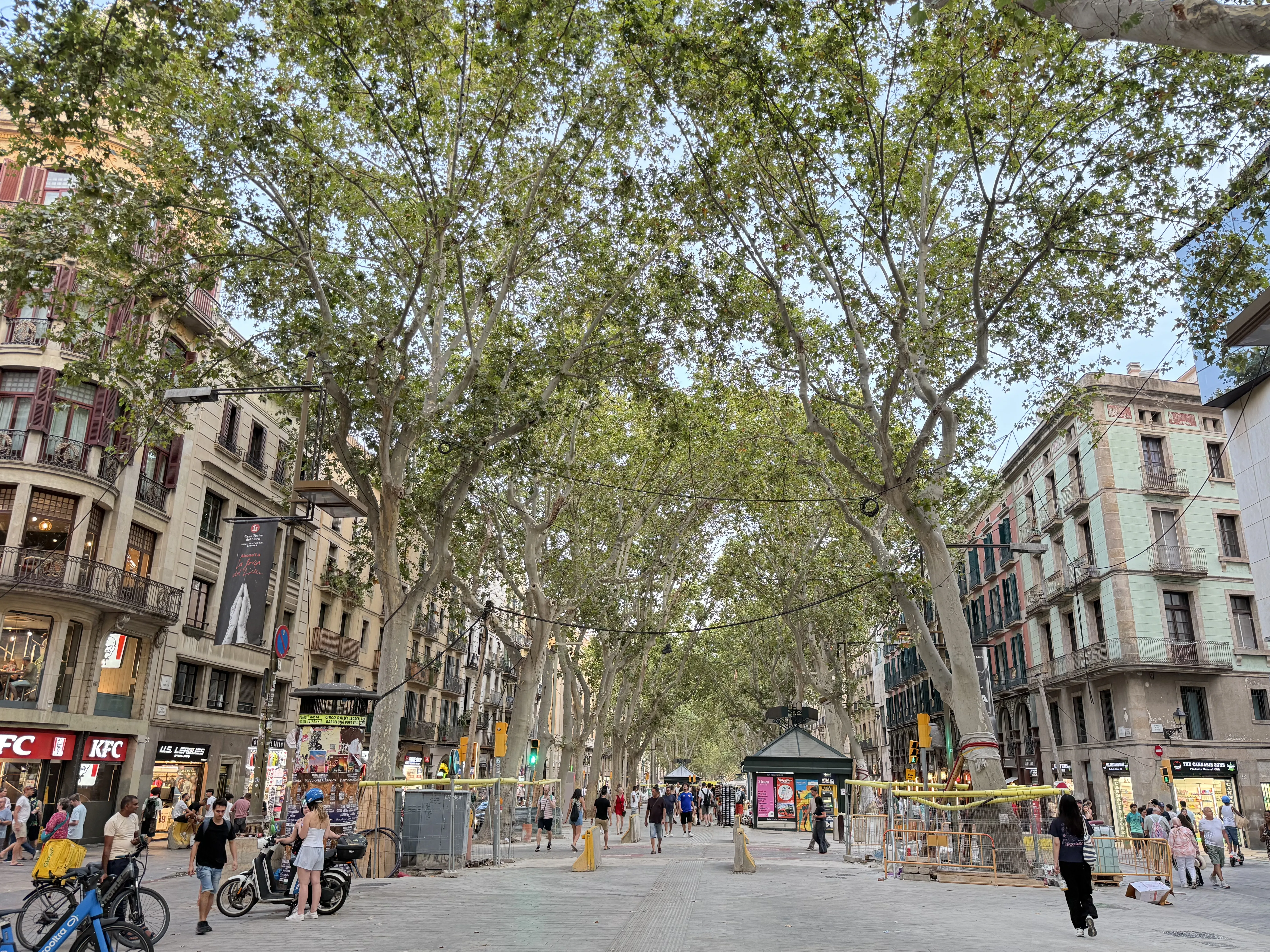
Every guidebook puts La Rambla at the top of the list. I won't. It's worth walking once for orientation and the Miró mosaic underfoot, but in 2026 it's also a construction site lined with chain restaurants. Here's what it actually is right now, not what the postcards show.
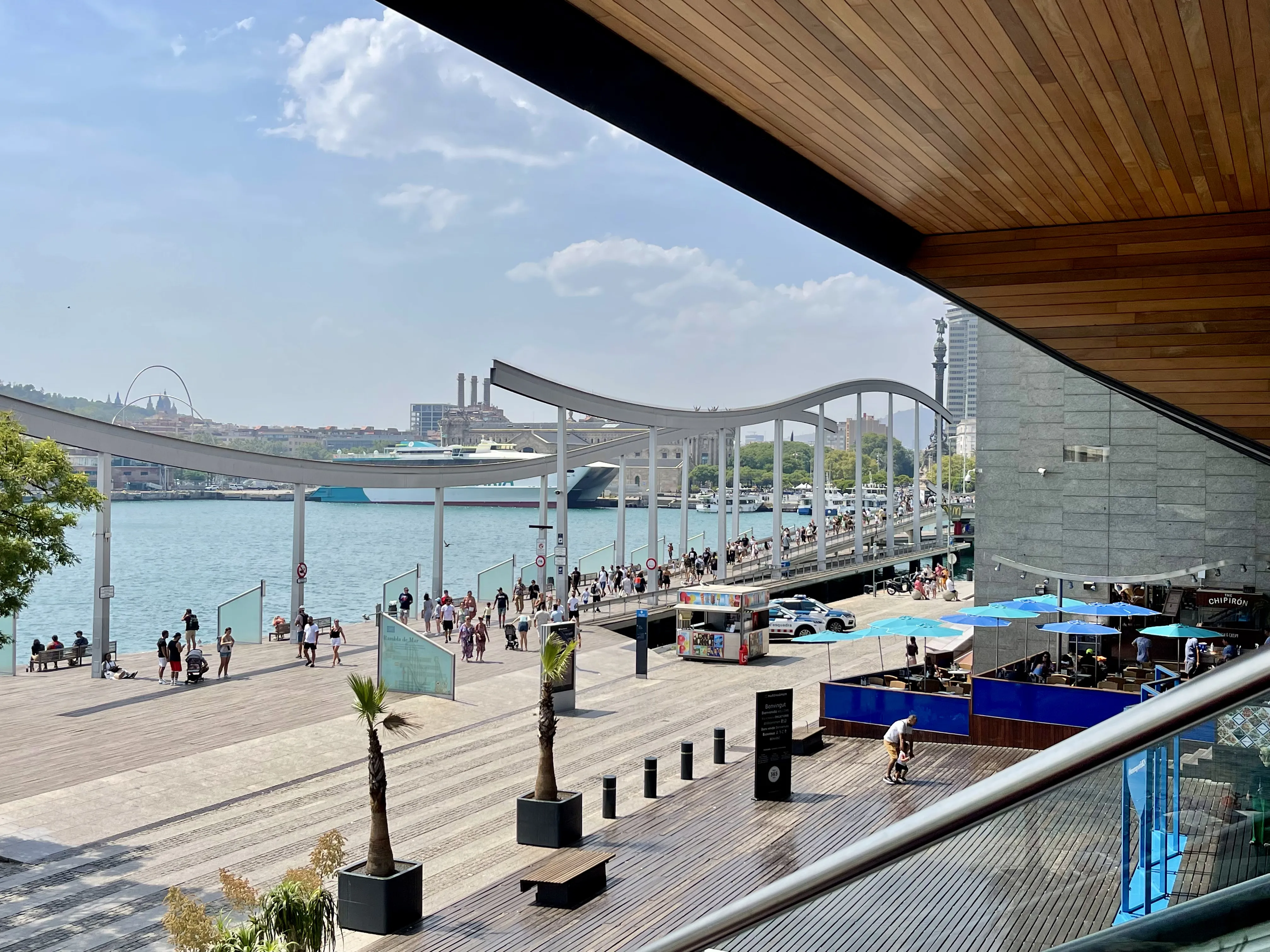
A "Rambla" is not unique to this street. It is a type of city landscape design: a wide, tree-lined boulevard built over what used to be a seasonal riverbed or stream, running through the middle of a city rather than around its edges. Barcelona has several, and this one, simply "La Rambla,". It runs about 1.2 kilometres from Plaça de Catalunya down to the old port, and it's the closest thing the city has to a single spine.
I have walked it more times than I can count, sometimes for a client meeting near the port, sometimes just to cut through the city. I will tell you honestly what it's like to walk it now, in 2026, rather than repeat what every other site says about it.
The Story
The street's original name was La Rambla de les Flors, the Rambla of the Flowers, and for a long stretch of its history that was the purpose the street served. Flower stalls lined the middle promenade, and locals actually did their shopping here. Some of that flower market character survives in patches, but it's been squeezed hard by tourism and, more recently, by construction.
What is easy to forget, walking it today, is that this was a working street for Barcelona long before it became a bucket-list item. It connected the old city to the sea, and that function, more than the shops now lining it, is still the reason it's worth understanding.
Construction in 2026
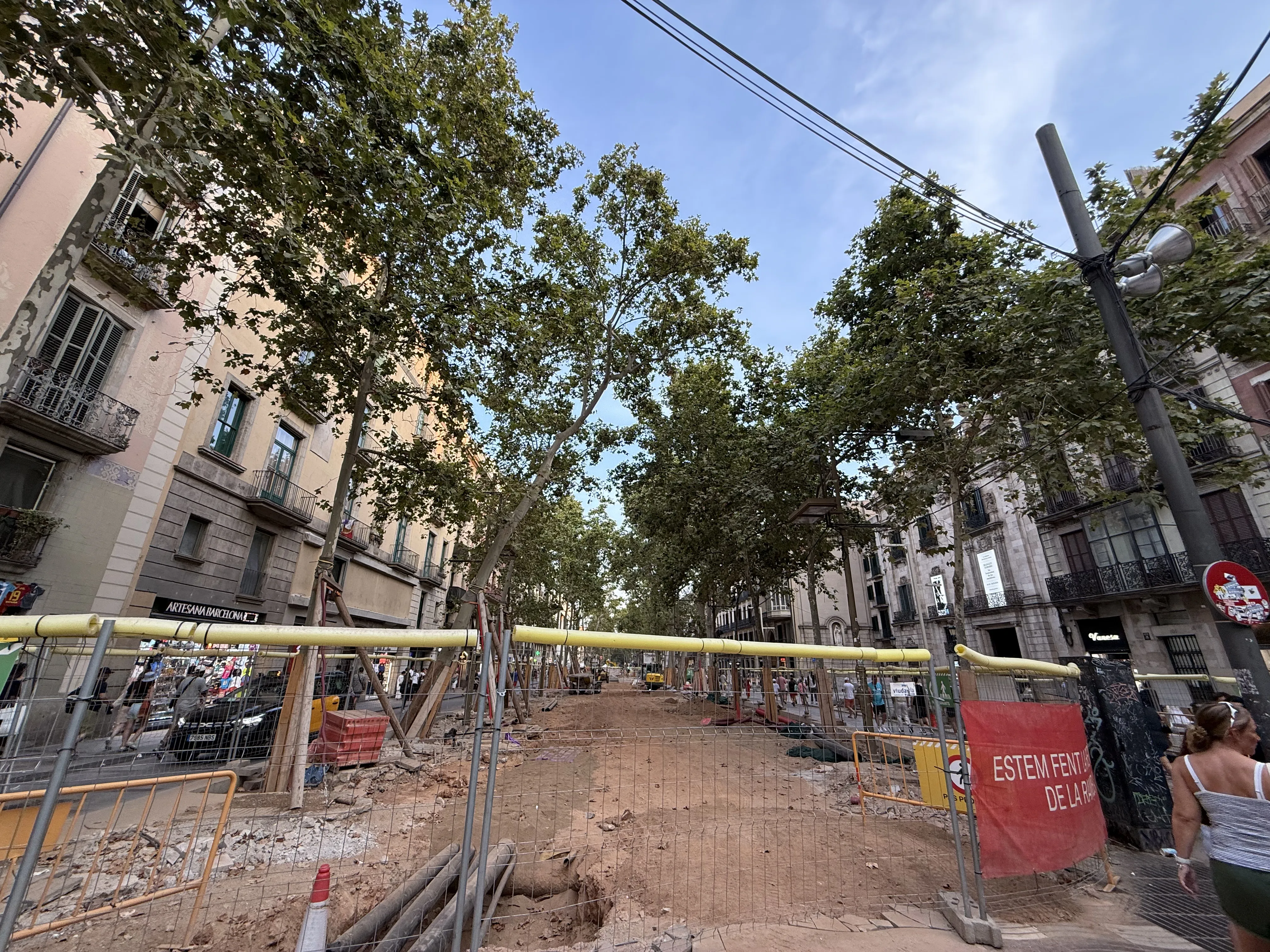
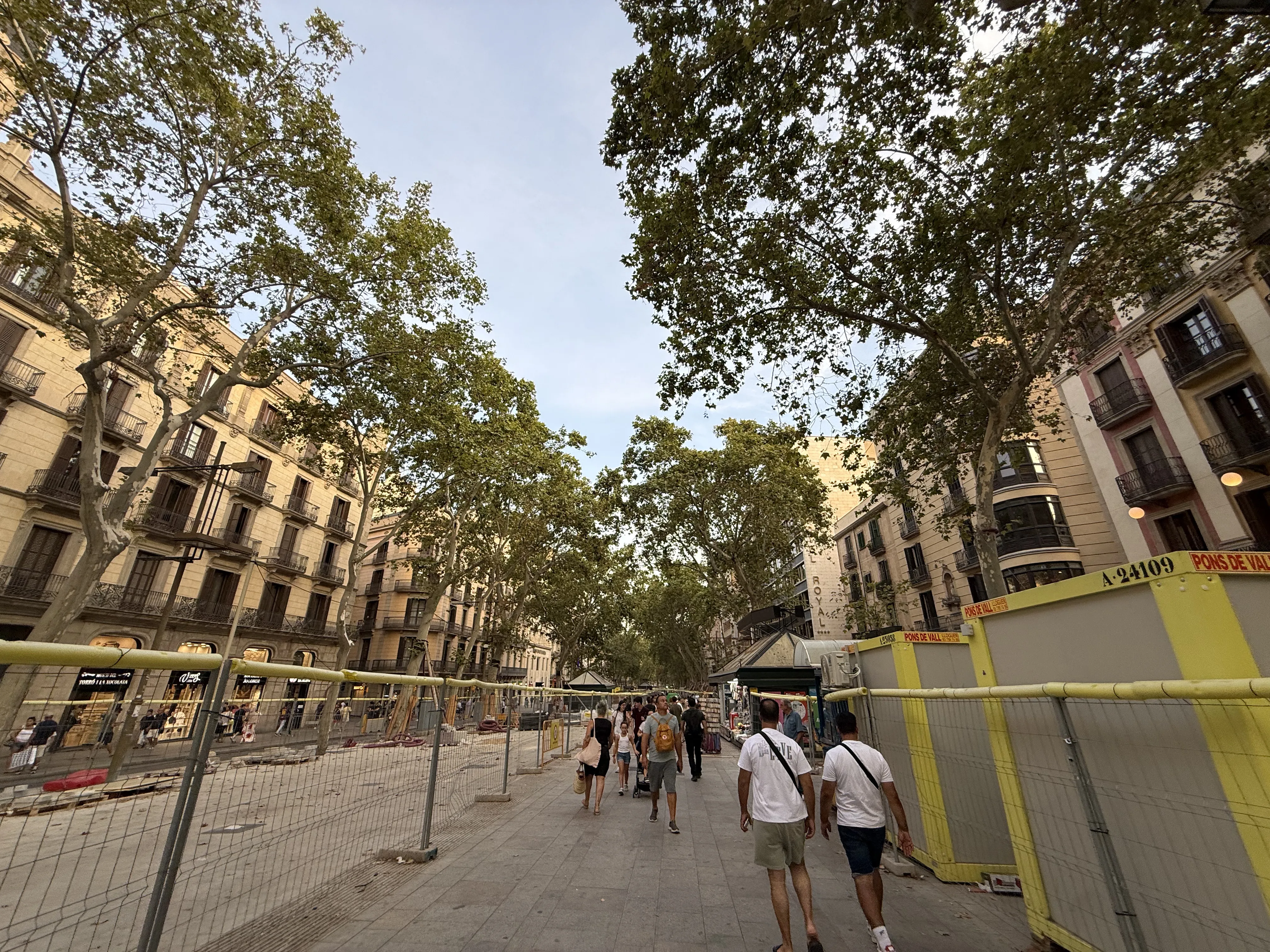
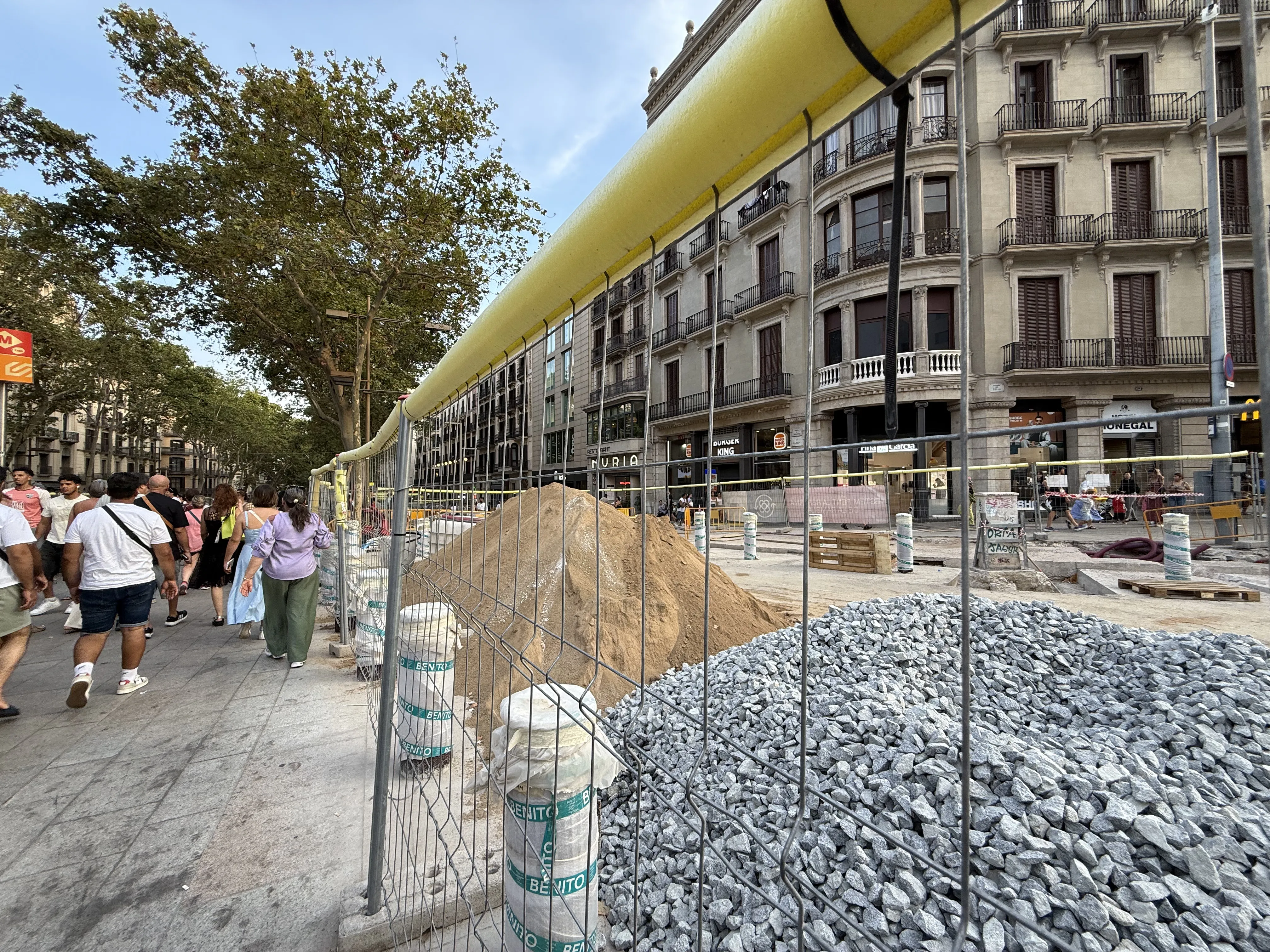
If you saw older photos of La Rambla online, be prepared for a different street. Work is ongoing along stretches of it as of August 2026, and it isn't expected to wrap up before early 2027. Expect hoarding, temporary walkways, and sections that look nothing like the postcard version. I have photographed it as it actually looks right now rather than pull old stock images, because the gap between the two is significant enough to matter if La Rambla is on your Barcelona visit list.
None of this makes the street dangerous or unwalkable. It just means slower going in places, and a stroll that is more about getting from one end to the other than lingering.
The overall scale of the current works, seen from street level.Hoarding and barriers, close up, along one section.How pedestrians are currently routed around the works.
The Restaurants Are a Trap
I am not going to soften this one. What lines La Rambla now is almost entirely global chains and restaurants built for turnover, not for the food. Menus with photos of every dish, staff pulling you in from the doorway, prices that have nothing to do with what is on the plate and everything to do with the address. I will not be naming any of them, but the vast majority of them are avoided by the locals.
The honest advice is simple: don't eat here. Walk five or ten minutes into the surrounding streets instead, and you will do better almost every time.
El Gòtic and El Raval
La Rambla splits two very different neighbourhoods: El Gòtic on one side, El Raval on the other. Both are genuinely a bit hit and miss, and a street a few doors down can flip from charming to forgettable with no warning. What I will say is that either one gives you better odds than staying on La Rambla itself.
If you want an actual, specific recommendation rather than a general direction, that's exactly the kind of thing I help with directly. Get in touch through Work With Me if you'd like a proper local steer rather than a guess.
Safety and Pickpocketing
La Rambla is one of the most heavily targeted streets in Barcelona for pickpocketing. The reason is simple: it is permanently crowded with tourists who are distracted, looking up, checking phones, or fumbling with a map. That combination is exactly what pickpockets look for, and they work this street professionally.
Keep bags in front of you, phones in a closed pocket, and stay aware in the denser sections. For the full picture on where else in the city to be careful and how to actually protect yourself, see our Stay Safe guide, which covers La Rambla specifically as one of the higher-risk areas.
The Joan Miró Mosaic
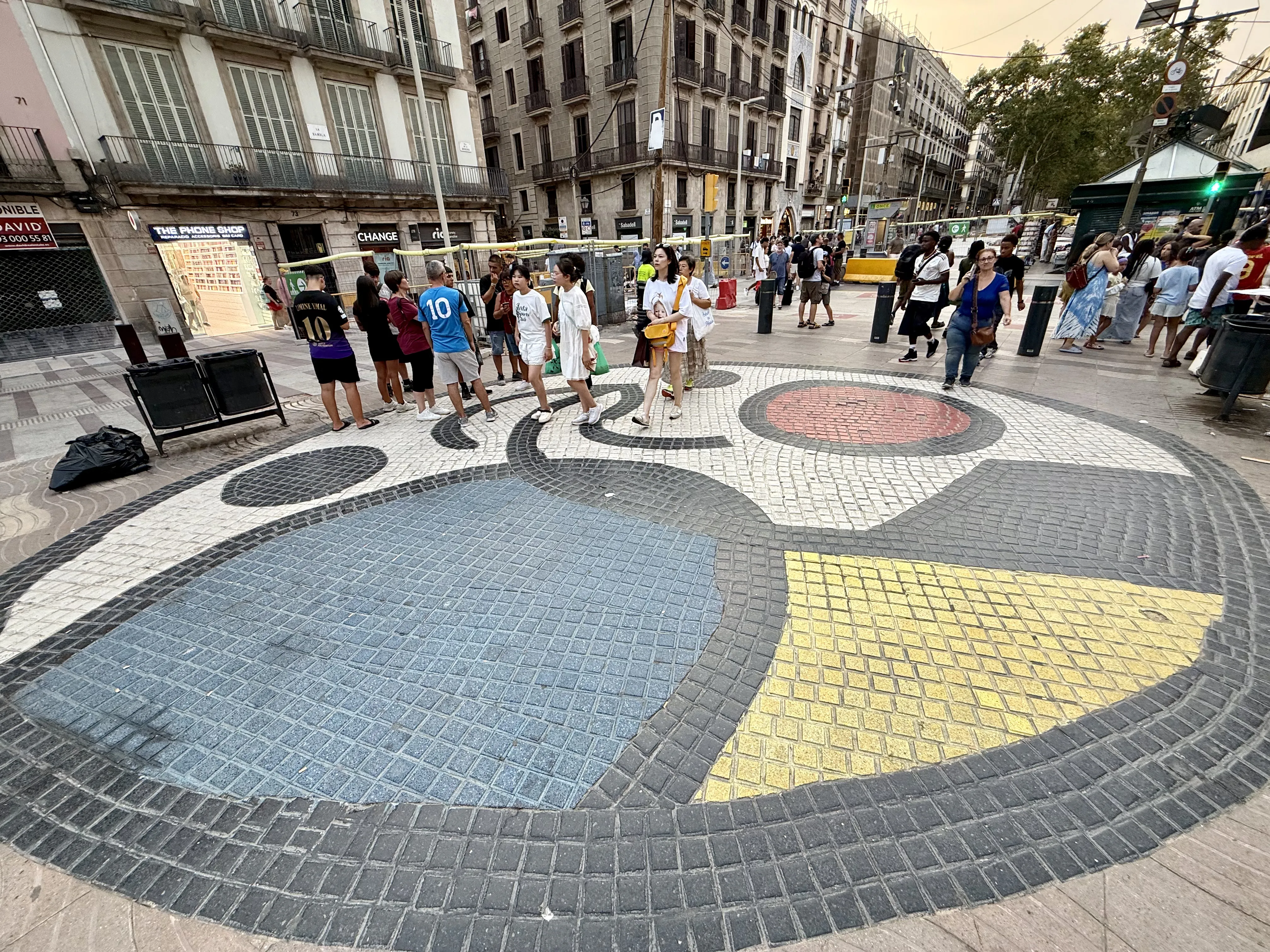
Partway down the street, set into the pavement at Pla del Boqueria, there is a circular mosaic designed by Joan Miró. One of his works on a public space. It is fairly easy to walk straight over it without noticing, especially with the crowds, but it's one of the few things on this street that's genuinely worth stopping for. Bold primary colours, simple shapes, unmistakably Miró once you know to look down.
It's also, quietly, a meaningful point on the street. This is where the vehicle used in the August 2017 attack came to a stop. The documentary series 800 Meters covers that day in detail if you want to understand what happened here, but on this page I'll leave it at that single line, out of respect for what it represents.
If you want to see more of Miró's work properly, rather than a single mosaic underfoot, the Fundació Joan Miró up on Montjuïc is the real destination.
Visiting
La Rambla is a public street, not a ticketed venue, so there's no booking to think about. Here's what to know before you walk it.
Getting ThereLiceu and Drassanes stations (green line, L3) both sit directly on La Rambla. Plaça de Catalunya, at the top of the street, is served by multiple metro and FGC lines.
EntryFree. It's a public street, so there's nothing to book and no ticket required.
Frequently Asked Questions
Yes. Work is ongoing along the street and isn't expected to finish until early 2027, so expect hoarding, detours, and a different look than older photos online suggest.
It's worth walking once, mostly for orientation and the Miró mosaic, but don't expect a highlight of your trip. Most of what lines it now is chain restaurants and souvenir shops rather than anything distinctly Barcelona.
It's one of the more heavily targeted spots in the city for pickpocketing, precisely because it's so crowded with distracted tourists. See our Stay Safe guide for specifics on staying alert here.
Generally, no. Prices are inflated for the location, not the food, and the honest advice is to walk a few minutes into El Gòtic or El Raval for something a little better, though both of those areas are a bit hit and miss too, so it's not a guaranteed upgrade, just better odds.
A circular pavement mosaic by Joan Miró, set into the street partway down La Rambla, easy to miss if you're not looking for it.
Liceu and Drassanes (both green line) sit right on it, and Plaça de Catalunya marks the top of the street.