La Pedrera vs Casa Batlló
Which Gaudí House to Visit
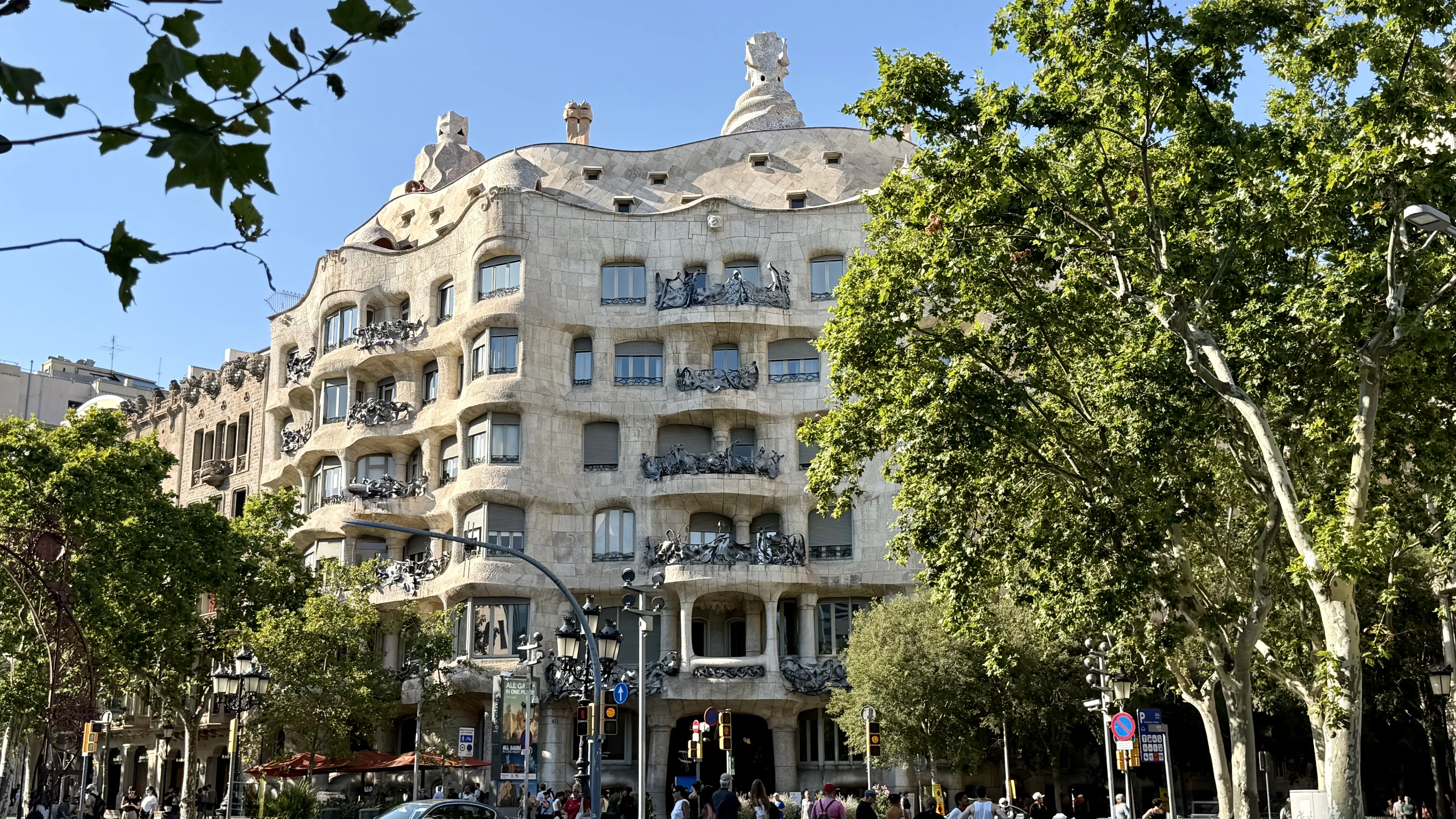
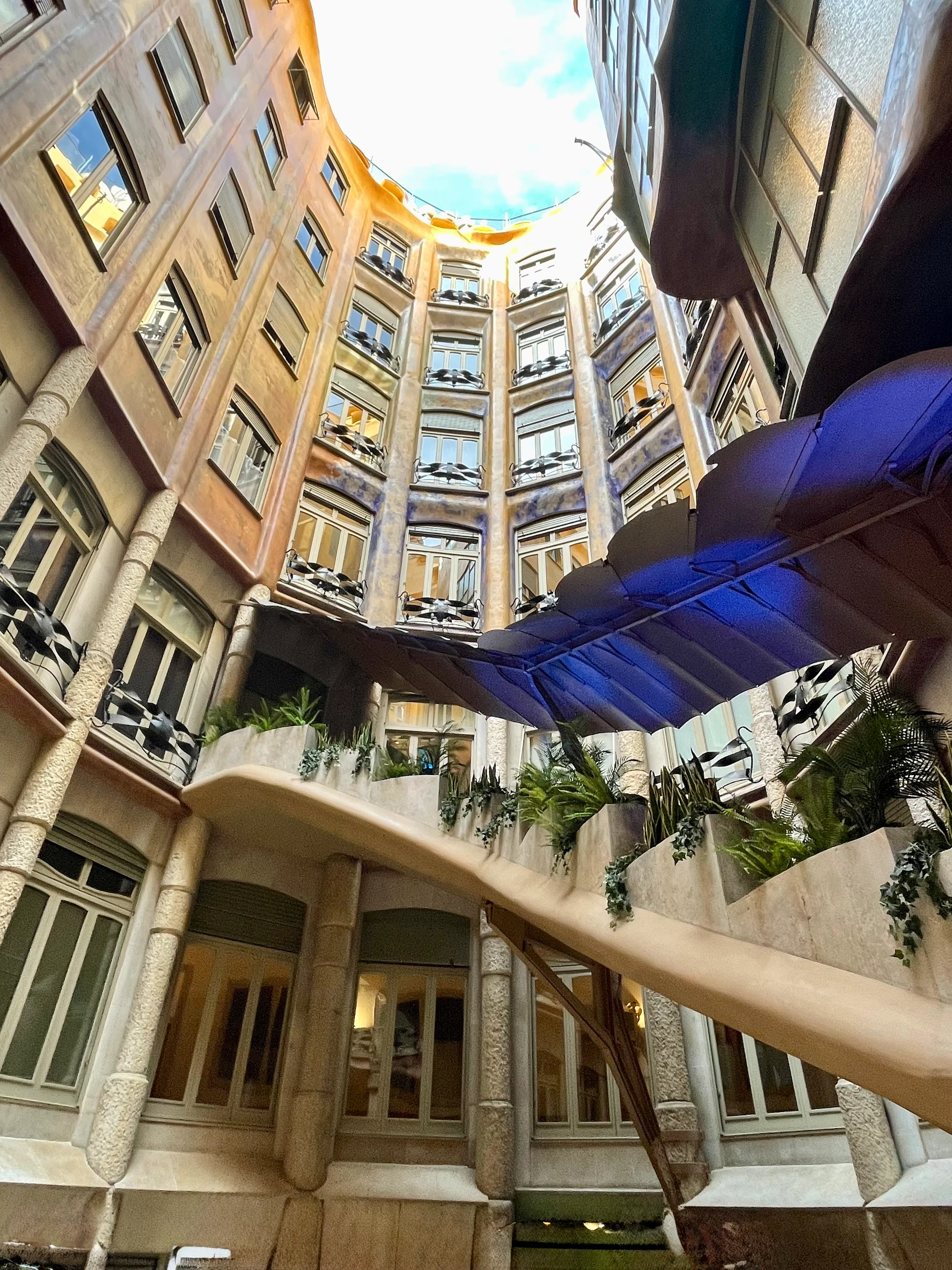
A few blocks up from Casa Batlló, La Pedrera ripples along the street like a wave frozen in stone. Where Casa Batlló is dreamlike and sensory, La Pedrera is for those who want to understand how Gaudí's genius actually worked in practice.
Neither is the "better" choice, they're just different visits. If you have to pick one, go with whichever description above appeals to you more. If you can fit in both, they're close enough together that a single afternoon covers it easily.
Inside La Pedrera
The Apartment, Attic and Rooftop
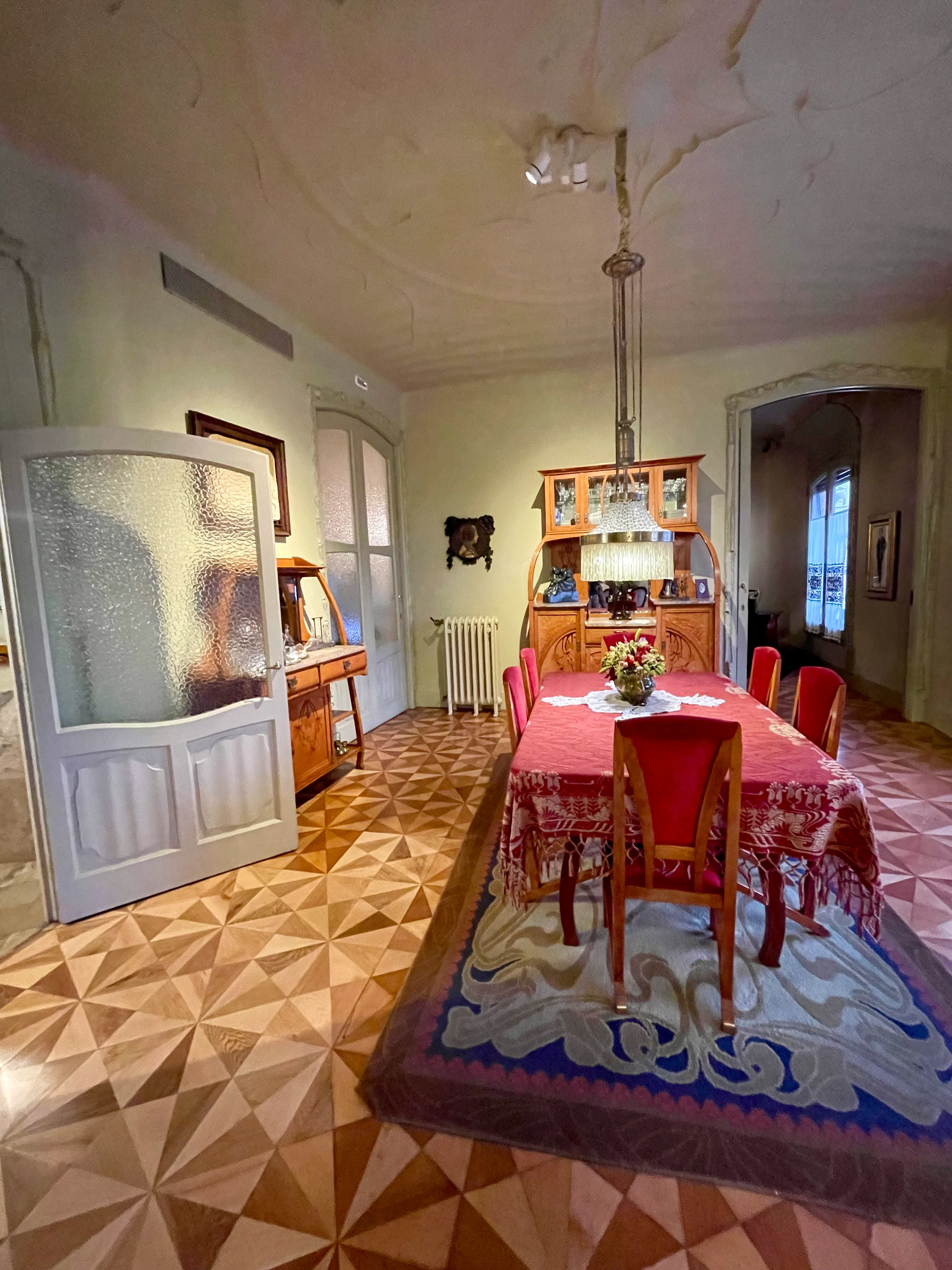
You can walk through a beautifully preserved early 20th-century apartment, fully furnished, and get a real sense of what it meant to live inside one of Gaudí's buildings. It's the most human-scale part of the visit — less about spectacle, more about how the building actually functioned as a home.
Then comes the attic, with its famous catenary arch structure. Gaudí used the same parabolic shape here that shows up throughout his work, and standing inside it makes the engineering logic click in a way that photos never quite manage.
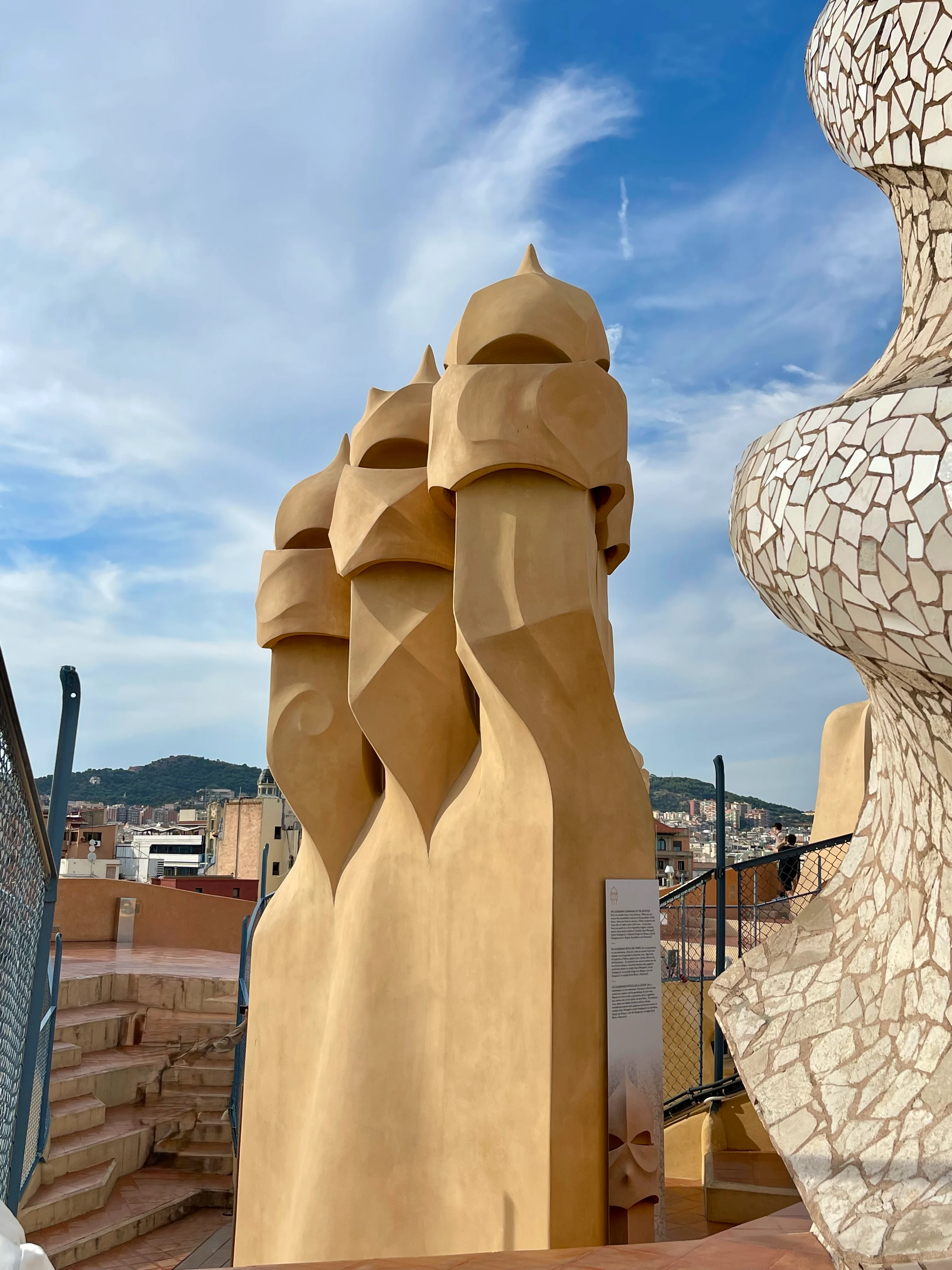
Last is the rooftop, home to the iconic warrior chimney sculptures that look like they belong in a sci-fi film rather than a building finished in 1912.
La Pedrera Rooftop
Weather and Timing to Know
Weather note: the rooftop is exposed to the elements and can close if conditions are poor. Check the forecast before you book, or at least before you go, especially if the chimneys and rooftop views are the main reason you're visiting.
Someone Still Lives at La Pedrera
An Interesting Aside
La Pedrera is a UNESCO World Heritage Site and one of the most visited buildings in Barcelona — which makes it all the more remarkable that one of its apartments is still privately inhabited today. The tenant, living quite literally inside one of the world's most famous landmarks, eventually wrote a book about what daily life actually looks like when thousands of tourists pass by your front door every single day. As you can imagine, it is quite the story.
Tickets
Affiliate link — I earn a small commission if you book through these links, at no extra cost to you.
Getting to La Pedrera
La Pedrera sits on Passeig de Gràcia. The closest metro stop is Diagonal, on lines L3 and L5 — from there it's a short walk along one of the city's grandest boulevards, past Gràcia's other Modernista landmarks on the way.
Address
Passeig de Gràcia, 92, 08008 Barcelona
Getting There
Metro: Diagonal (L3, L5) — a short walk down Passeig de Gràcia.
Tickets
Book online in advance, and check the weather forecast if the rooftop is your main reason for visiting.
Frequently Asked Questions
Is La Pedrera the same as Casa Milà?
Yes. Casa Milà is the building's official name, after the family who commissioned it. La Pedrera, meaning "the stone quarry", is the nickname locals gave it because of its rough, rippling facade — and it's the name most visitors know it by today.
Should I visit La Pedrera or Casa Batlló?
They're different sides of Gaudí. Casa Batlló is more dreamlike and sensory, built around colour and light. La Pedrera is the more architectural visit — the apartment, attic and rooftop show you how his structural ideas actually worked. If you only have time for one, pick based on which description appeals to you; if you can fit in both, they're a six-minute walk apart.
Does anyone actually live in La Pedrera?
Yes. Despite being a UNESCO World Heritage Site and one of the most visited buildings in Barcelona, one of its apartments remains privately inhabited. The tenant has written about what daily life looks like with thousands of tourists passing by every day.
Can the La Pedrera rooftop close due to weather?
Yes. The rooftop is fully exposed to the elements, and it can close temporarily in heavy rain or high winds. Check the forecast before you book, or at least before you go, especially if the rooftop and its warrior chimneys are the main reason for your visit.
What's the closest metro stop to La Pedrera?
Diagonal, served by lines L3 and L5. From there it's a short walk down Passeig de Gràcia, passing several of Gràcia's other Modernista buildings on the way.
Is La Pedrera a UNESCO World Heritage Site?
Yes. La Pedrera was designated a UNESCO World Heritage Site in 1984, as part of the broader recognition of Gaudí's work in Barcelona.