Getting Around Attractions Shopping Barcelona Life Stay Safe Work With Me
← Attractions
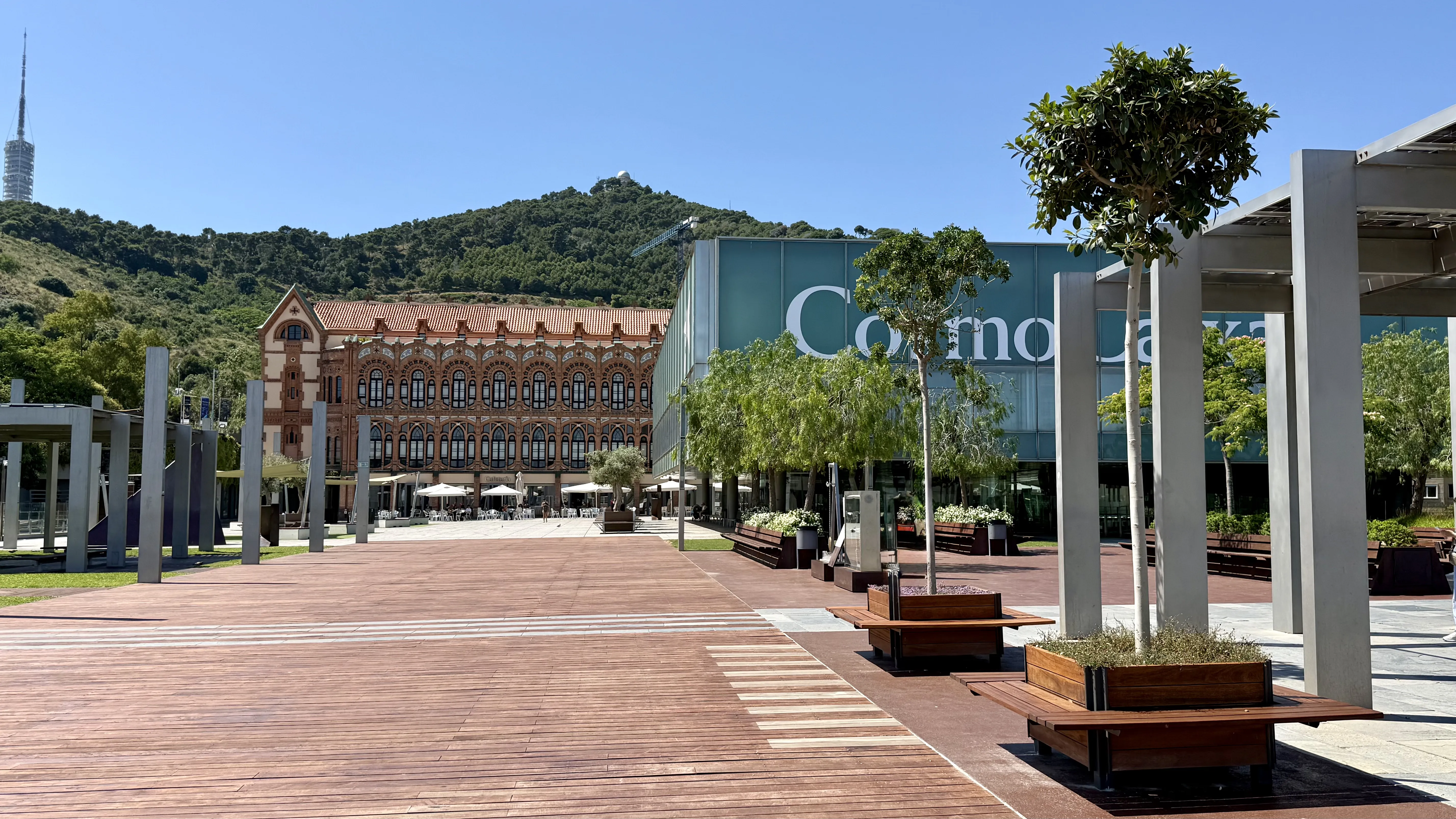
CosmoCaixa Barcelona entrance exterior in Zona Alta
Science Museum · Zona Alta

CosmoCaixa Barcelona — Science You Can Actually Experience

Barcelona's best science museum — and one of the most genuinely engaging places in the city. The flooded forest alone is worth the trip up the hill.

What Is CosmoCaixa?

This is my personal favourite science museum in Barcelona. And I say that as someone who doesn't always gravitate towards science museums.

CosmoCaixa gets it right in a way that most don't. It doesn't talk down to you, it doesn't overwhelm you with walls of text, and it works just as well for a curious seven year old as it does for an adult who thinks they're not particularly interested in biology. It is one of those places where you go in for two hours and come out four hours later slightly surprised at where the time went.

The museum covers biology, physics, chemistry and natural history — but what makes it genuinely special as a science museum in Barcelona is how it all connects. Nothing feels like a standalone exhibit dropped in without context. It builds. Each floor leads you somewhere that makes the last one feel more interesting in retrospect.
The Building — A Spiral Into Something Unexpected

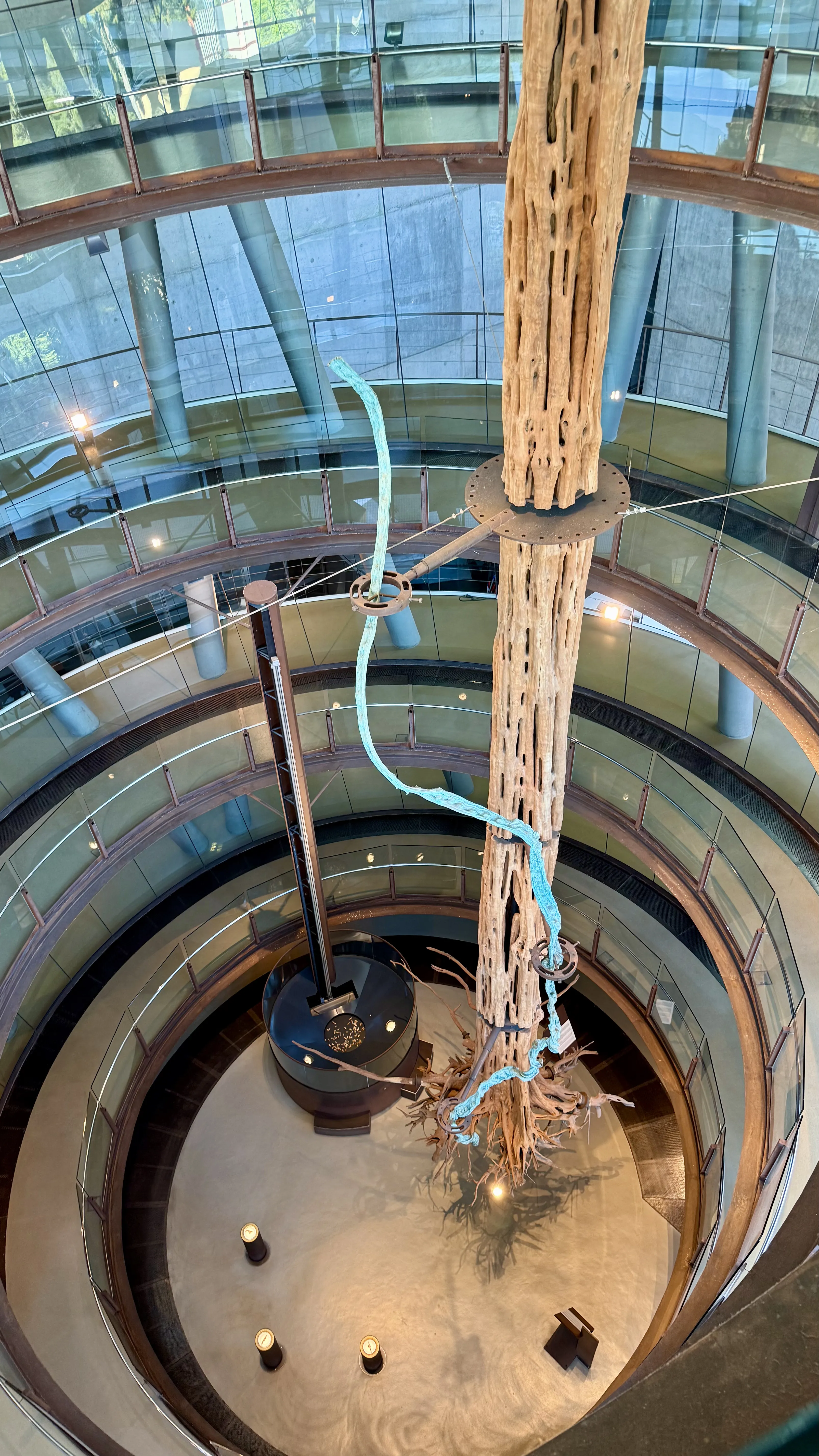
The most iconic feature of CosmoCaixa Barcelona is the spiral corridor that greets you when you arrive. It starts at the top and winds you gradually down to the ground floor, where the main museum begins. It sounds like a simple architectural detail — and it is — but it works. By the time you reach the bottom, you are already inside the experience without quite realising you have started.

It sets a tone that the rest of the museum keeps delivering on.

The spiral staircase at CosmoCaixa Barcelona

What's Inside — The Highlights

The collection spans multiple floors and covers an impressive range — from geology and the origins of the universe to living ecosystems and hands-on science experiments you can interact with directly. This is not a museum where you read about things. You test them, adjust them, and watch them happen in front of you.

The upper floors occasionally host planetarium-style screenings — documentary films about space and the natural world that would feel at home in an IMAX. Worth checking what's on before you go, as the programme rotates.

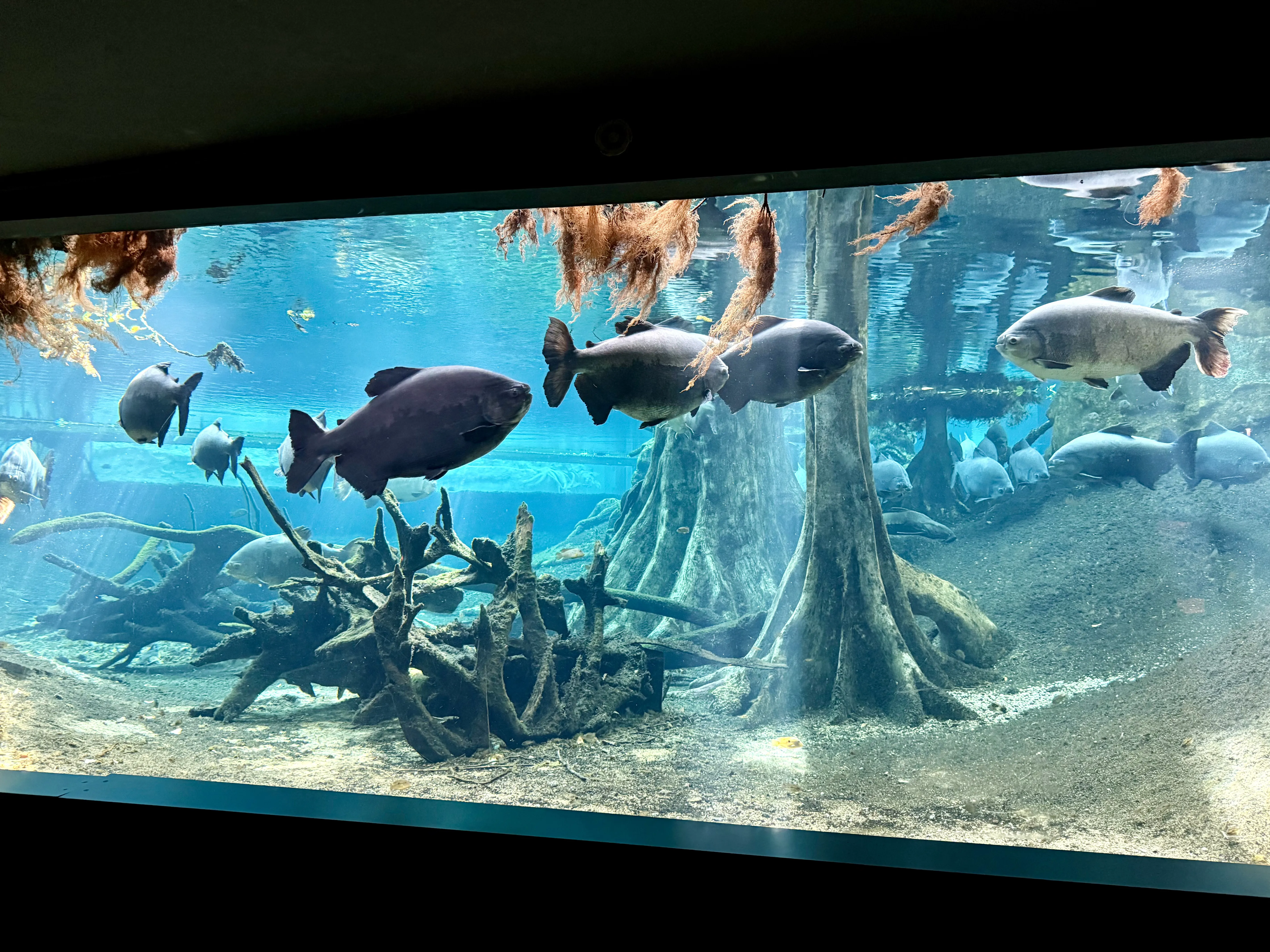
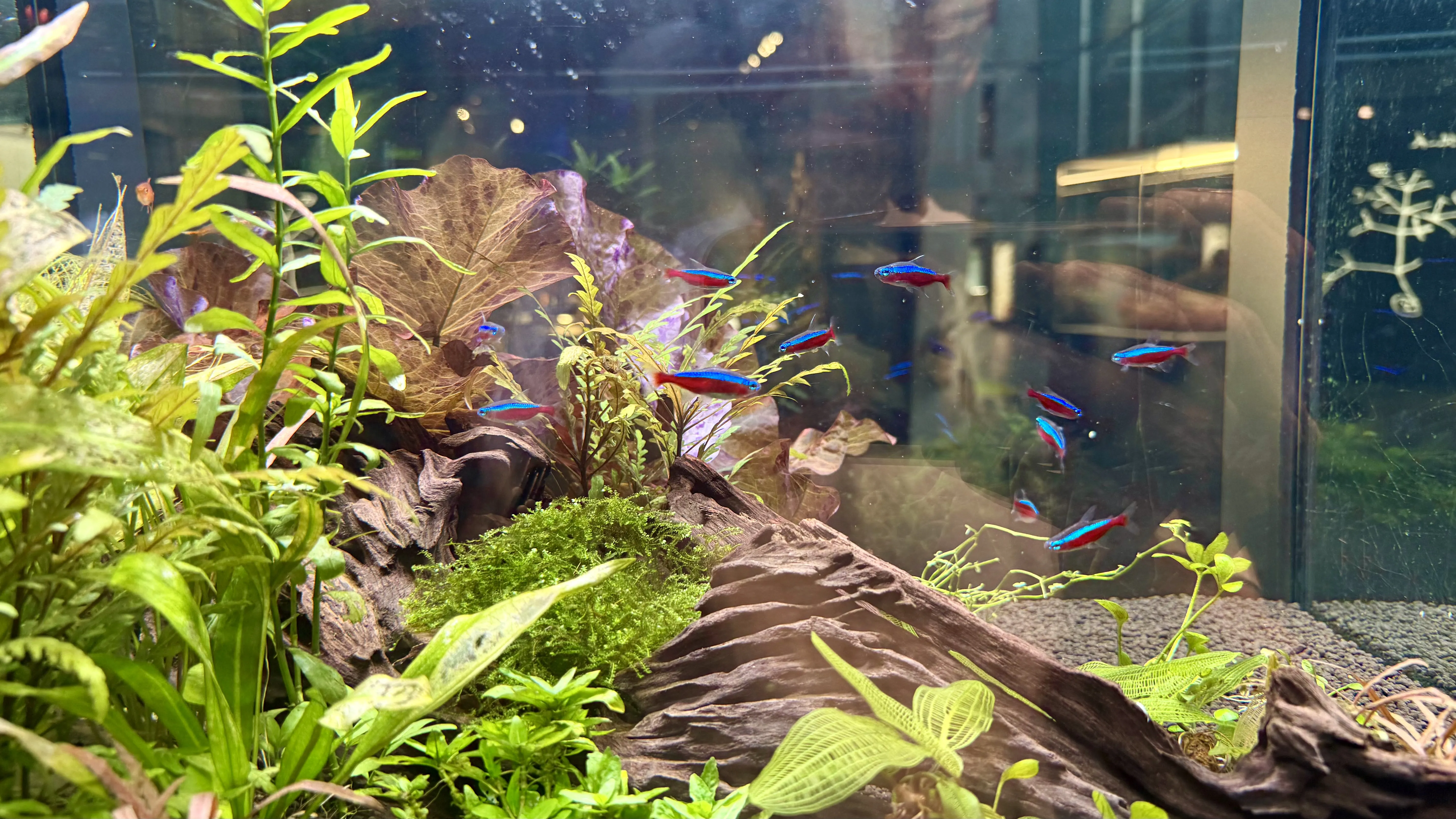
Fishtank inside CosmoCaixa Barcelona

The Flooded Forest — The One Thing Everyone Remembers

The standout feature of CosmoCaixa Barcelona is the flooded forest and aquarium space. It is a hybrid environment — partly open, partly enclosed — and it is unlike anything else in the city.

From the outside, you can look down below the waterline and watch the fish and aquatic animals going about their lives. Then you walk in, and suddenly you are at the same level as them, looking through the glass from inside the water. The shift in perspective is genuinely arresting — it takes a second to process.

Large fishtank inside the flooded forest at CosmoCaixa Barcelona
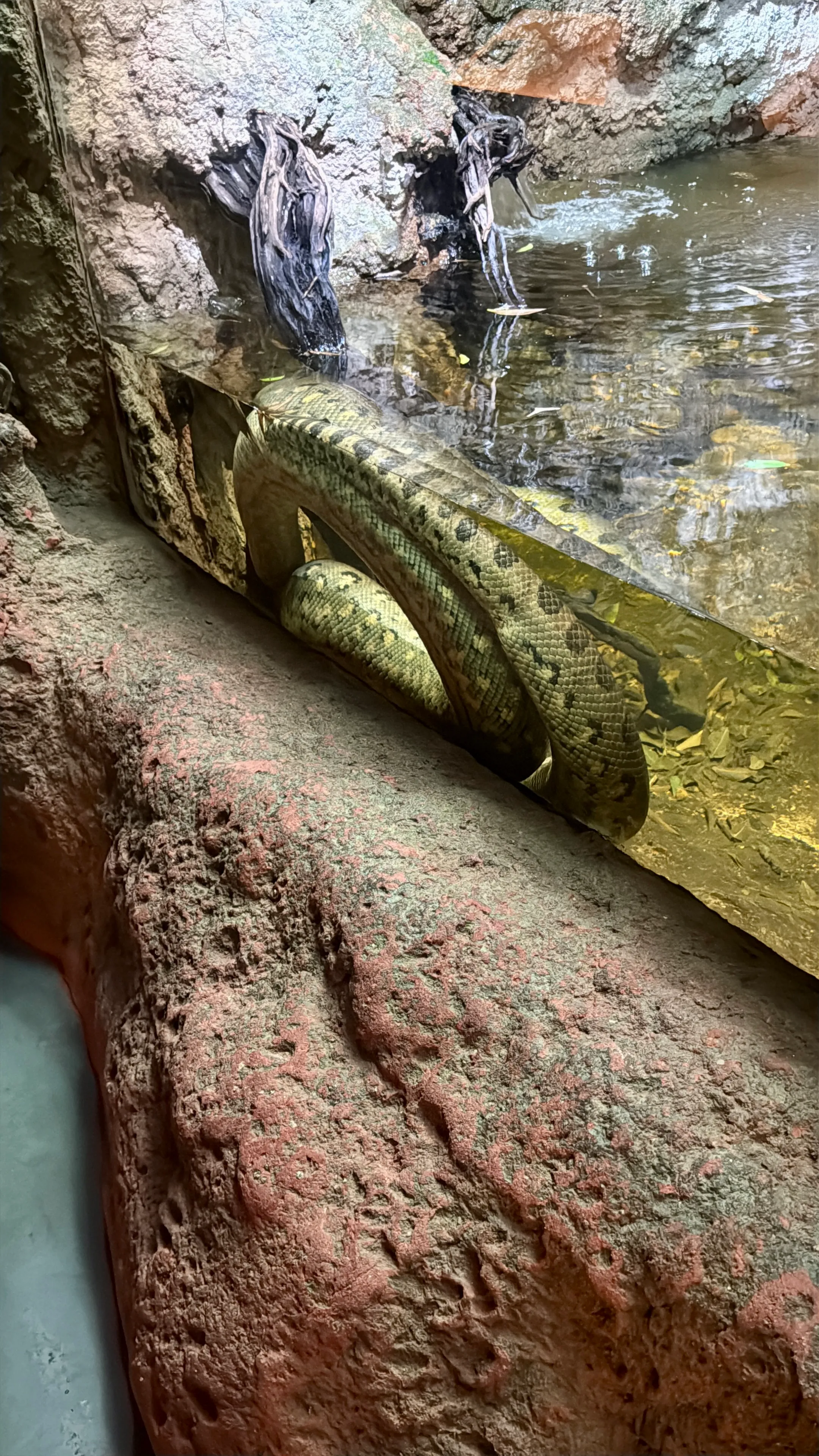
Inside the flooded forest ecosystem at CosmoCaixa Barcelona

There is also a capybara living in there. If you are visiting with children, consider this your warning: the capybara will end your schedule for the rest of the afternoon, and honestly that is fine.

An Honest Aside — What Surprised Me

Two things.

The first was the capybara — I was not expecting to be as delighted by this as I was. But it is hard not to be.

The second was the hands-on science section. I went in thinking it was mostly aimed at children, and left having spent considerably longer than I expected adjusting pendulums and testing physical principles I last thought about in school. It is genuinely engaging for adults, not just something to keep children occupied while you wait for the interesting part. There is no waiting for the interesting part — this is the interesting part.

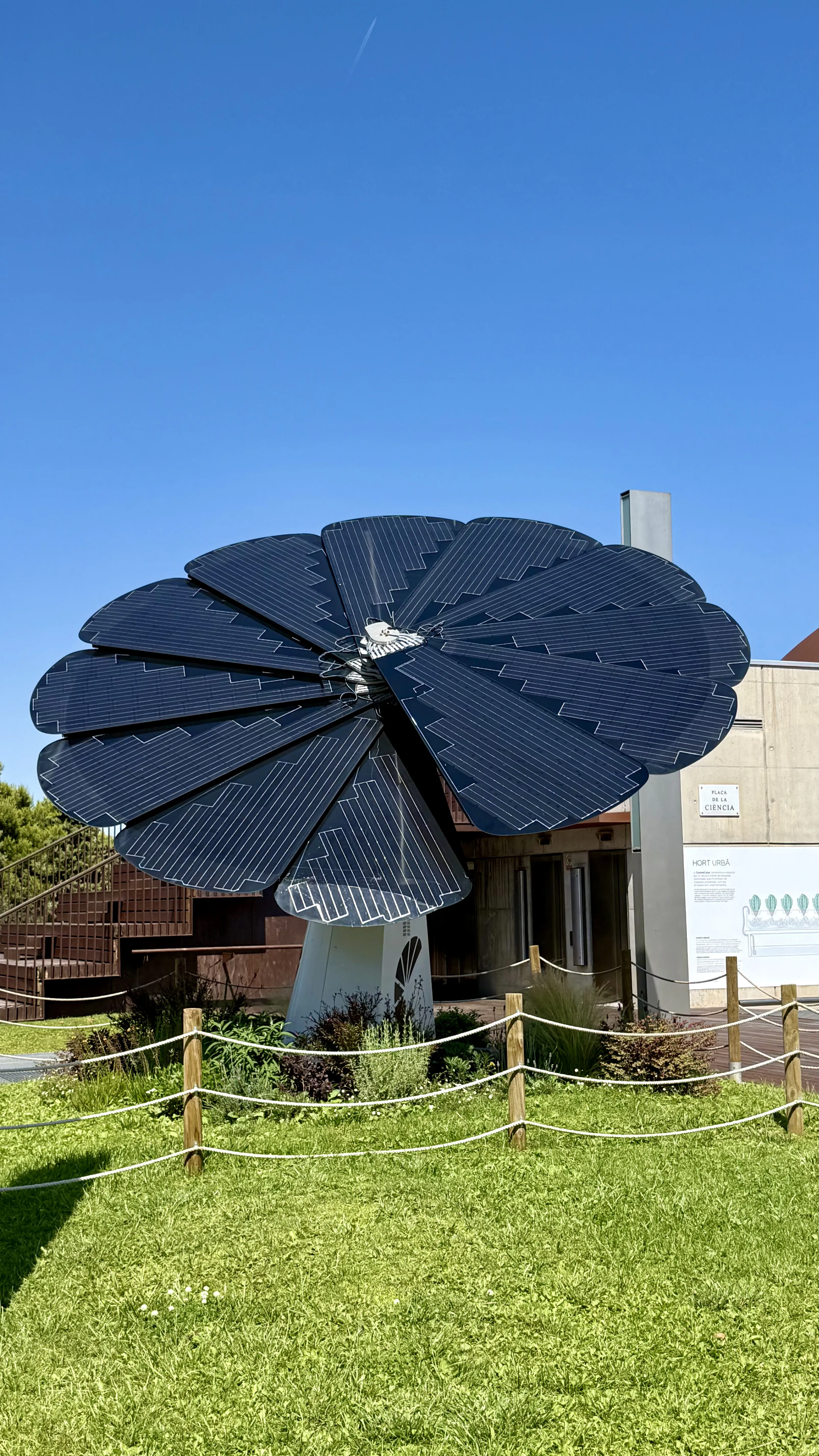
Photovoltaic sunflower outside CosmoCaixa Barcelona

Visiting CosmoCaixa Barcelona — What You Need to Know

Anywhere between two and four hours depending on how much you want to explore. It rewards a slow visit but it is also perfectly enjoyable at a faster pace if time is tight. Do not rush the flooded forest.

It works at any time of day and in any weather — which makes it a genuinely smart option if Barcelona decides to have one of its occasional grey days. Fully indoor, fully air conditioned, and engaging from start to finish.

Address Carrer d'Isaac Newton, 26, Zona Alta, Barcelona
Getting There FGC train from Plaça Catalunya to Avinguda del Tibidabo, then walk or take the Tramvia Blau up the hill. Allow extra travel time from the seafront or El Born.
How Long Two to four hours — don't rush the flooded forest
Best For Families, curious adults, rainy day visits — genuinely suitable for all ages
Tickets Book online in advance — faster than queuing and the same price as the door

Frequently Asked Questions

Is CosmoCaixa Barcelona worth it?
Yes — and not just for families. It is the best science museum in Barcelona and one of the most genuinely engaging museums in the city full stop. The flooded forest alone justifies the visit.
How long do you need at CosmoCaixa Barcelona?
Between two and four hours. Two hours is enough to see the highlights at a comfortable pace. Four hours if you want to go slowly, spend time in the hands-on sections, and linger in the flooded forest.
Is CosmoCaixa Barcelona good for kids?
It is one of the best options in Barcelona for families. The hands-on science sections work for children of all ages, and the flooded forest and capybara tend to be the highlight of any child's day. It works equally well for adults travelling without children.
How do you get to CosmoCaixa Barcelona?
Take the FGC train from Plaça Catalunya to Avinguda del Tibidabo, then walk or take the Tramvia Blau up the hill. It sits in the Zona Alta — uphill from the centre — so give yourself a little extra travel time if coming from the seafront or El Born.
What is the flooded forest at CosmoCaixa?
A hybrid ecosystem — part open environment, part enclosed aquarium — where you can observe aquatic animals from above the waterline and then walk inside and see them from below. It is the signature space of the museum and genuinely unlike anything else in Barcelona.